
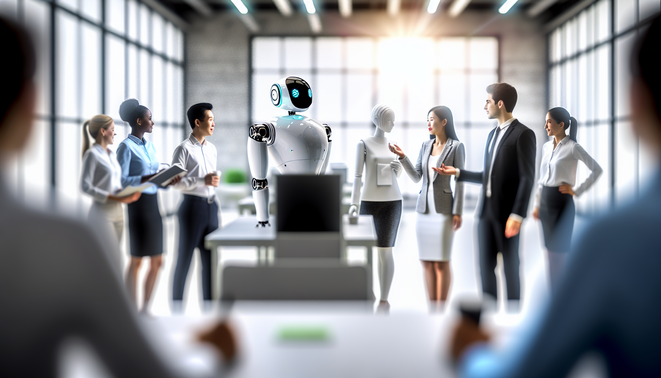
Introduction to AI Automation
Artificial Intelligence (AI) automation refers to the use of AI technologies to enhance or automate routine tasks, significantly impacting today’s technological landscape. By leveraging algorithms and machine learning, AI is capable of performing tasks that traditionally require human intelligence, such as problem-solving, decision-making, and pattern recognition, thereby increasing efficiency and reducing operational costs in various sectors. For more insights into how AI can be employed effectively in various contexts, explore our article on Using Generative AI Effectively.
Key Technologies Driving AI Automation
Key technologies driving AI automation include machine learning, natural language processing (NLP), and robotics, each playing a significant role across various sectors.
- Machine Learning is a foundational element in AI automation, enabling systems to learn from data and improve over time without explicit programming. Industries like finance leverage machine learning algorithms for predictive analytics and fraud detection, enhancing decision-making processes. For example, machine learning models analyze transaction patterns to identify anomalies, significantly reducing financial risks [Source: IBM].
- Natural Language Processing allows machines to understand and interpret human language, facilitating better interaction between humans and computers. In customer service, NLP applications empower chatbots and virtual assistants to engage with customers effectively, providing personalized responses and support. Companies like Amazon and Google utilize NLP to improve user experience in their virtual assistants [Source: Forbes].
- Robotics, closely related to AI automation, refers to the design and deployment of robots that can perform tasks autonomously or semi-autonomously. In manufacturing, robots automate repetitive tasks, enhancing production efficiency and safety. This technology is being increasingly adopted in sectors such as healthcare, where robotic systems assist in surgeries or logistics [Source: NirSpec].
Together, these technologies are transforming industries by optimizing processes, reducing costs, and improving overall service delivery, marking a significant shift in how businesses operate.
Applications of AI Automation Across Industries
AI automation is reshaping industries by enhancing efficiency, accuracy, and customer satisfaction. Here’s how it’s being applied across various sectors:
- Healthcare: AI automation is revolutionizing patient care and operational processes. Machine learning algorithms analyze medical imaging for faster cancer detection, improving accuracy over traditional methods. AI is also streamlining administrative tasks such as scheduling and billing, allowing healthcare professionals to focus more on patient interactions [Source: Health Affairs].
- Finance: In the financial sector, AI automates trading through algorithmic processes that analyze market trends and execute trades at lightning speed. Additionally, AI-powered chatbots enhance customer service. Banks like JPMorgan Chase utilize AI to automate compliance processes, reducing the risk of human error [Source: Forbes].
- Manufacturing: AI is integral to the industry’s shift towards smart factories. Automation systems predict maintenance needs before equipment failures occur, significantly reducing downtime and repair costs. Companies like Siemens employ AI to enhance production quality [Source: Mordor Intelligence].
- Customer Service: AI automation is transforming customer service through AI chatbots and virtual assistants that provide immediate responses to customer queries. Companies such as Zendesk leverage AI to improve service delivery [Source: Zendesk].
In summary, the integration of AI in these sectors showcases potential not only for increased efficiency but for improved service delivery and operational excellence.
Challenges and Considerations in Implementing AI Automation
Implementing AI automation within organizations presents challenges that must be navigated for successful integration.
- Ethical Implications: One significant ethical challenge is the potential for bias in AI algorithms, which can perpetuate existing inequalities. Organizations need to actively work on creating transparent systems that minimize discrimination [Source: Forbes].
- Data Security: The rise of AI increases risks related to data privacy. AI systems often require large amounts of sensitive data, which if not protected adequately, may be vulnerable to breaches [Source: IBM].
- Workforce Reskilling: As AI technology evolves, there is a pressing need for workforce reskilling. Organizations must invest in training programs that not only upskill their current workforce but prepare them for new roles that AI will create [Source: Harvard Business Review].
Addressing these challenges requires a strategic approach, involving all levels of the organization.
The Future of AI Automation: Trends and Predictions
The future of AI automation is poised for profound transformation across various sectors with several emerging trends.
- Increased AI Integration: AI technologies are being integrated into more business processes, enhancing efficiency. According to a report by McKinsey, companies are increasingly adopting AI systems for operational automation [Source: McKinsey].
- Reshaping the Job Market: The rise of AI is likely to reshape labor markets significantly. A World Economic Forum report predicts that AI could displace 85 million jobs by 2025, while creating 97 million new roles [Source: World Economic Forum].
- Emphasis on Human-AI Collaboration: Future workplaces will likely focus on hybrid models where human workers collaborate with AI systems, enhancing productivity [Source: Deloitte].
- Economic Shifts: AI will drive economic changes, leading to efficiency gains and the creation of new markets [Source: The Economist].
- Policy and Regulation: Policymakers will establish guidelines to ensure the responsible use of AI technologies, addressing concerns about job displacement and data privacy [Source: ITU].
In summary, the future of AI automation promises both opportunities and challenges as it reshapes traditional business models and labor markets.
Sources
- The Economist – The Economics of AI
- Forbes – How AI is Changing the Finance Industry
- Forbes – How Natural Language Processing is Transforming Businesses
- Forbes – The 7 Key Challenges of Artificial Intelligence in 2020 and Beyond
- Health Affairs – AI in Healthcare
- IBM – Machine Learning
- IBM – Data Breach
- Harvard Business Review – How to Reskill Your Workforce in the Age of AI
- ITU – Workshop on the Future of AI
- McKinsey – Featured Insights on AI
- Mordor Intelligence – Artificial Intelligence in Manufacturing Market
- World Economic Forum – The Future of Jobs Report 2023
- Zendesk – AI Customer Service: 6 Benefits
- NirSpec – The Impact of Robotics on Manufacturing
- Deloitte – Technology and the Future of Work